The push for electric vehicles (EVs) has been relentless, with politicians and activists alike hailing them as the future of transportation and the key to saving the planet. But a recent incident involving Rivian electric vehicles reveals the dark side of this green energy agenda, one that its proponents would prefer you didn’t see.
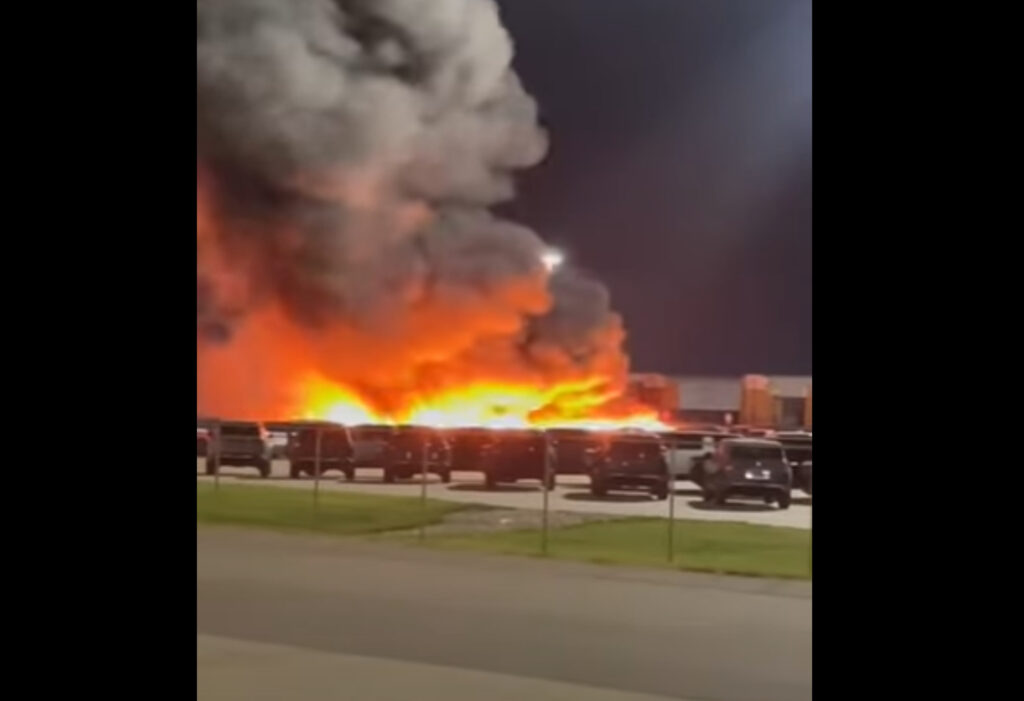
According to eyewitness accounts, dozens of Rivian EVs were engulfed in a massive fire that sent plumes of smoke billowing into the sky. The scene was chaotic as firefighters struggled to contain the blaze, which reportedly started when one vehicle caught fire and quickly spread to the others. The intensity of the fire was so severe that it left nothing but charred remnants of what were once hailed as cutting-edge vehicles. As one witness described it, “It was like a giant ball of fire—it just kept spreading, and there was nothing anyone could do.”
This incident should be a wake-up call for everyone who has been sold on the promise of electric vehicles as a safe and sustainable alternative to traditional cars. The fact that dozens of these vehicles could go up in flames so easily raises serious questions about the safety and reliability of EVs. Are we rushing into a future where we’ll be driving ticking time bombs?
This isn’t the first time EVs have been involved in catastrophic fires. Similar incidents have been reported with other brands, highlighting a dangerous trend that cannot be ignored. The batteries that power these vehicles are highly volatile, and when they fail, the results can be disastrous. Yet, despite these risks, the green energy agenda continues to push forward, often without considering the potential consequences.
But the issue goes beyond just the safety of the vehicles themselves. The rapid push for EVs is part of a broader agenda that prioritizes environmental ideology over practical concerns. Policymakers are rushing to ban gas-powered vehicles and replace them with electric alternatives, all in the name of fighting climate change. But as the Rivian fire demonstrates, this rush to go green comes with significant risks that are being swept under the rug.
There’s also the question of whether the infrastructure is ready to support a mass transition to electric vehicles. Charging stations are still few and far between in many parts of the country, and the power grid is already strained in several states. How will we handle the added demand when millions of these vehicles are on the road? And what about the environmental impact of producing and disposing of the batteries that power these vehicles? The green energy agenda conveniently glosses over these inconvenient truths.
Moreover, the drive to electrify everything is being fueled by massive government subsidies and incentives, funded by taxpayer dollars. The government is essentially picking winners and losers in the marketplace, favoring companies like Rivian that promise to deliver on the green energy dream. But as this fire incident shows, the reality doesn’t always match the rhetoric. The American people are being forced to foot the bill for an unproven technology that may not be as safe or sustainable as its proponents claim.
And then there’s the issue of accountability. When traditional automakers face safety issues, they are subject to recalls and regulatory scrutiny. But the green energy industry often seems to operate with impunity, shielded by the narrative that they’re saving the planet. How many more fires, accidents, or other incidents will it take before the public demands real oversight and accountability for the companies pushing these technologies?
In conclusion, the Rivian fire disaster is more than just a tragic accident—it’s a warning. The rush to embrace electric vehicles and other green technologies without fully understanding the risks is a dangerous gamble. We need to take a step back and consider whether the benefits of these technologies truly outweigh the costs, both in terms of safety and in terms of their broader impact on our society. The green energy agenda should not come at the expense of our safety, our economy, or our freedom to choose the best options for our lives. It’s time to reevaluate the path we’re on before it’s too late.