As June begins and the corporate world enters its annual public observance of “Pride Month,” Major League Baseball has once again joined the fray. But this year, the league’s symbolic gesture was met with notable resistance from a growing number of fans and commentators who view the campaign as tone-deaf in light of the nation’s shifting cultural and political climate.
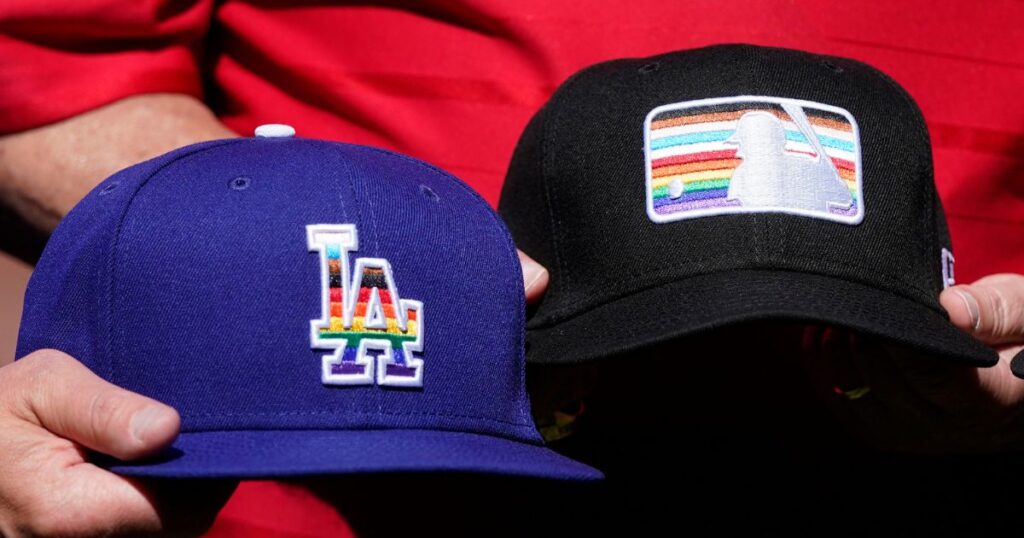
On Sunday, MLB’s official X (formerly Twitter) account posted its updated Pride Month logo — a version of the league’s traditional design adorned with rainbow colors — alongside the caption “Everyone’s game. #PRIDE.” What followed was a wave of criticism, much of it reflecting a broader cultural fatigue with corporate LGBTQ+ advocacy.
Megan Basham, a journalist with The Daily Wire, responded plainly: “All this does is turn people off.” Her remarks resonated with thousands of social media users who echoed her frustration.
“I’m so sick and tired of it, Megan,” wrote one commenter. Another simply added, “Pride fatigue.”
Others went further, suggesting they would boycott MLB entirely. “And just like that I’m not spending a dime to watch MLB this year,” one user wrote, referencing high-profile backlash against brands like Bud Light and Target, which faced major consumer revolts after aggressively promoting progressive social causes.
In a widely shared post, another user cited Dodgers pitcher Blake Treinen, who previously condemned what he called “propaganda or politics” being pushed on sports fans. “We’ve seen what happened to Bud Light and Target,” the quote read, reinforcing the idea that corporate activism comes with real financial consequences.
For many conservatives, MLB’s latest gesture is not just misguided marketing — it’s evidence that the league is out of touch with the country’s changing mood.
After President Donald Trump’s victory in the 2024 election, many corporations began quietly walking back aggressive social campaigns, wary of alienating large swaths of their customer base. In that context, MLB’s rainbow-themed messaging feels like a relic of a different political era, according to some critics.
More broadly, the “pride” movement itself continues to face pushback from religious Americans, particularly Christians who object to both the moral framing and the language used in corporate Pride Month campaigns.
While many Americans support the right of consenting adults to live as they choose, conservative Christians argue that “pride,” as currently defined and celebrated, conflicts directly with their faith. “Pride” is not seen as a neutral concept, but as a theological flashpoint.
As one conservative commentator noted, “By lumping all non-hetero sexual proclivities under the ‘pride’ heading, you have announced your open hostility to Christianity.”
Indeed, C.S. Lewis, one of the most influential Christian thinkers of the 20th century, famously described pride as “the great sin” and “the complete anti-God state of mind.” For observant Christians, “Pride Month” represents not simply a celebration of lifestyle diversity, but a promotion of a mindset fundamentally at odds with Christian humility and moral teaching.
This conflict places companies like MLB in a difficult position. By publicly embracing Pride Month, they may believe they are promoting inclusion, but they risk excluding a different set of Americans — those who hold traditional values and feel increasingly unwelcome in mainstream cultural spaces.
Critics argue that corporations can and should serve all customers equally without taking public stances that alienate millions. For many, that would mean offering goods and services without joining political or ideological movements. In a deeply polarized culture, neutrality is often the wisest course.
As of Monday afternoon, MLB had not issued any additional statements in response to the backlash. But the message from a growing number of fans was clear: stick to baseball, and leave politics and virtue signaling out of the ballpark.


