
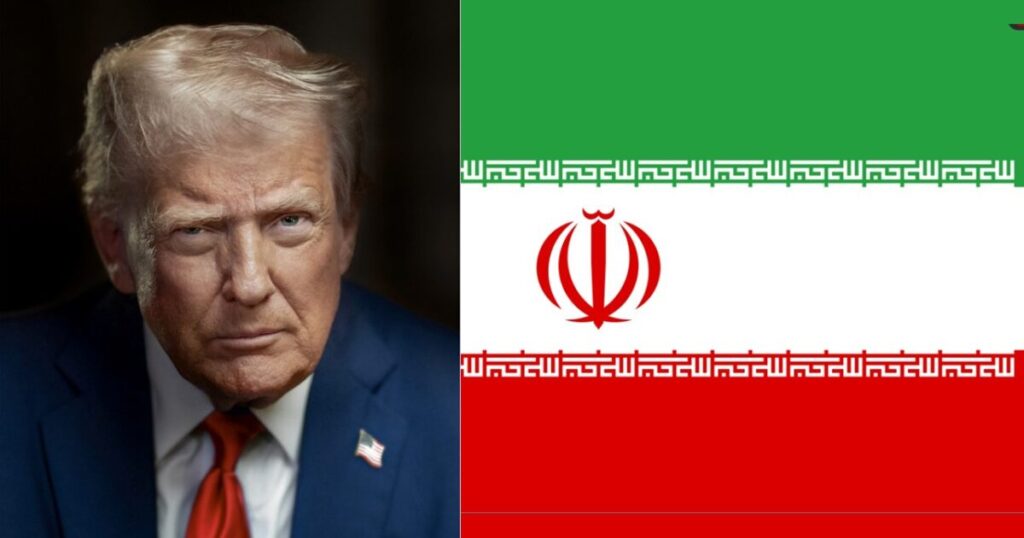
President Donald Trump’s latest pressure campaign against Iran is being framed as more than another sanctions package. According to a Gateway Pundit column by Antonio Graceffo, the real test is whether Washington is willing to punish the outside governments, companies and financial channels accused of keeping Tehran’s economy and military networks alive.
Graceffo wrote that Trump announced what he called a “crushing economic operation” against Iran on Truth Social, describing it as “Economic Warfare and Isolation on an unprecedented scale” and labeling it an “ECONOMIC D-DAY.”

The warning, as described in the column, targeted any country that lets banks, businesses, airports or government entities provide a “lifeline” to Iran. Trump specifically cited oil smuggling, swap lines, cash transfers, exchange houses, ship registries and front companies as channels that “need to stop NOW.”
The new pressure point: third countries
The United States has already used sanctions against Iran’s oil, shipping and financial sectors, and the column says the Trump administration has been running “Operation Economic Fury” since April. Graceffo argues that the added force in Trump’s new threat is the use of secondary sanctions — penalties aimed not only at Iran, but at countries and companies accused of helping Iran evade restrictions.
That distinction matters because, in Graceffo’s analysis, Iran’s economy and its Islamic Revolutionary Guard Corps have survived in part through outside support networks willing to route money, oil and supplies around U.S. and international sanctions.

The column says the threat followed the expiration of a 60-day negotiation window with Tehran and came after Treasury Secretary Scott Bessent previewed a new round of actions against Iran.
Iraq’s alleged role in oil and cash flows
Graceffo points to Iraq as a central example of how sanctions evasion can work. The column cites Treasury actions against Iraqi-Kittitian businessman Waleed al-Samarra’i, who was accused of operating a network that blended Iranian oil with Iraqi oil and sold it as Iraqi-origin crude.
According to the source material, Treasury said the scheme generated hundreds of millions of dollars for both Iran’s regime and al-Samarra’i.
The column also says Treasury designated Iraq’s deputy oil minister for allegedly abusing his position to divert Iraqi oil for the benefit of Iran and its proxy militias. Graceffo writes that such networks use Iraqi politicians, front companies and smugglers to move an estimated $1 billion annually away from the Iraqi people and toward Tehran.
Graceffo further notes that the Trump administration blocked a $500 million shipment of U.S. banknotes tied to Iraqi oil revenues held at the Federal Reserve Bank of New York. The column also says Iran supplied 8.8 billion cubic meters of natural gas to Iraq in 2023, making Iraq its largest single pipeline gas customer, while the U.S. continued a sanctions waiver for Iraqi gas imports even after rescinding a waiver for Iranian electricity.
China could become the biggest collision point
The column identifies China as Iran’s largest trading partner and the country most likely to face a confrontation if secondary sanctions are enforced more aggressively.
Graceffo writes that sanctions could target financial institutions serving independent Chinese “teapot” refineries that continue buying Iranian oil. He also notes that Beijing has warned Chinese entities not to cooperate with U.S. sanctions.
The source material describes China and Hong Kong as hubs for buying discounted crude and routing payments through front companies. It also names Dubai and UAE logistics centers, Malaysia and Singapore, and ship registries in Panama and Cameroon as parts of Iran-linked shadow networks, while noting that the UAE has since cut ties.
Beyond oil, Graceffo alleges that Chinese firms have supplied dual-use goods tied to Iran’s military programs, including precursor chemicals such as ammonium perchlorate. The column says one 1,000-ton shipment from Zhuhai to Bandar Abbas in early 2025 was assessed as enough propellant for 200 to 260 ballistic missiles.
The column also says Chinese firms have marketed drone engines, batteries, fiber-optic cables and computer chips usable in Iran’s Shahed-136 drones. It further reports allegations that China secretly supplied Iran with $5 billion in weapons systems, though those systems were reportedly destroyed by Israeli and U.S. strikes on the first day of the war.
Graceffo notes that Beijing has denied allegations of improper military assistance and says it strictly enforces export controls on dual-use products.
Russia and the shared sanctions-evasion web
The column argues that Iran, Russia and China are connected through overlapping military and financial networks. Graceffo writes that Russia has shipped drone components, ammunition and TNT explosives to Iran through the Caspian Sea using more than two dozen vessels.
He also argues that China’s support for Russia has helped prolong the war in Ukraine, while China is separately accused of supplying Iran with weapons or dual-use equipment. The column says these relationships rely on shared shadow fleets, front companies and Hong Kong-based shell entities used to move sanctioned oil and payments.
Graceffo’s broader argument is that secondary sanctions and embargoes aimed at China and Russia for their alleged support of Iran — along with sanctions on China for its support of Russia — could weaken supply chains tied to both the Iran conflict and the war in Ukraine.
He stops short of claiming sanctions alone would be enough. The column concludes that whether such pressure would succeed remains an open question, but argues that sanctions are likely to be most effective if enforced across the interconnected networks supporting both conflicts.