
A wave of pro-Iran online messaging is portraying the United States as militarily humiliated: ships supposedly sunk, aircraft allegedly shot down and allies said to be forcing American troops out.
But the claims described in the source material do not hold up. The central allegation — that Bahrain and Jordan demanded the withdrawal of U.S. forces — appears to combine unrelated events into a misleading story of state-level rejection.
Jordan petition is not government policy
In Jordan, the source material says more than 130 political, academic, tribal and trade union figures signed an open letter in July urging Amman to cancel or restrict its 2021 defense cooperation agreement with Washington.
That petition was directed at Jordan’s government. It was not a government demand for U.S. troops to leave.
Israeli analyst Ronen Yitzhak told The Jerusalem Post that the campaign was “exactly what Iran intended” when it struck Jordan and Gulf states earlier in the war. He described it as an effort to push public pressure toward a U.S. withdrawal that Amman itself has not sought.
According to the source, King Abdullah retains constitutional authority over the defense agreement and has given no indication that Jordan’s policy will change.
Bahrain departures came from Washington
In Bahrain, personnel did leave. But the source says that move came at Washington’s direction, not Manama’s.
The State Department ordered dependents and non-emergency staff to depart after Iran’s February 28 missile strike on the Fifth Fleet headquarters in Manama, according to the source material. That was described as a U.S. safety decision, not a Bahraini expulsion order.
The source also cites The Washington Post reporting that the Pentagon is considering withdrawing or repositioning forces from the Persian Gulf after more than 200 U.S. facilities were damaged or destroyed during the war. A senior Pentagon official characterized the process as “prudent planning,” not a final decision to withdraw.
Okinawa claims follow a familiar pattern
The same framing appears in claims about Japan, according to the source material.
Pro-China and anti-U.S. accounts frequently portray Okinawan opposition to some U.S. base arrangements as proof that Japan’s national government wants American troops gone. The source says that is not accurate.
Japan’s Ministry of Foreign Affairs describes the current realignment plan as a relocation of some Marines from Okinawa to Guam and other locations, reducing the burden on local communities while maintaining deterrence through U.S. Forces Japan.
A Congressional Research Service report cited in the source says the United States and Japan agreed in December 2024 to relocate roughly 4,000 Marines from Okinawa to Guam. The source adds that Tokyo is deepening operational integration through a new joint force headquarters.
In other words, local opposition to a specific base plan is being repackaged online as a national rejection of the U.S.-Japan alliance.
Fake attacks, recycled footage and AI-edited images
The troop-withdrawal narrative is only one part of a broader information campaign described in the source material.
NewsGuard had tracked 151 false claims related to the Iran war as of its August 28 update, collectively drawing hundreds of millions of views, according to the source.
One image allegedly showed an Iranian missile with a Farsi inscription reading, “In memory of the victims of Epstein Island.” The source says the image was confirmed to have been AI-edited and that the original predates the war without that writing.
A March 15 video of Benjamin Netanyahu joking about reports of his death was falsely labeled AI-generated to suggest he had actually died. The source says AI-detection firm GetReal Security and corroborating footage confirmed the video was authentic.
Other posts claimed Iranian missiles hit the USS Abraham Lincoln on March 2. According to the source, the video was from June 2025, the image dated to 2013, and CENTCOM denied that any strike occurred.
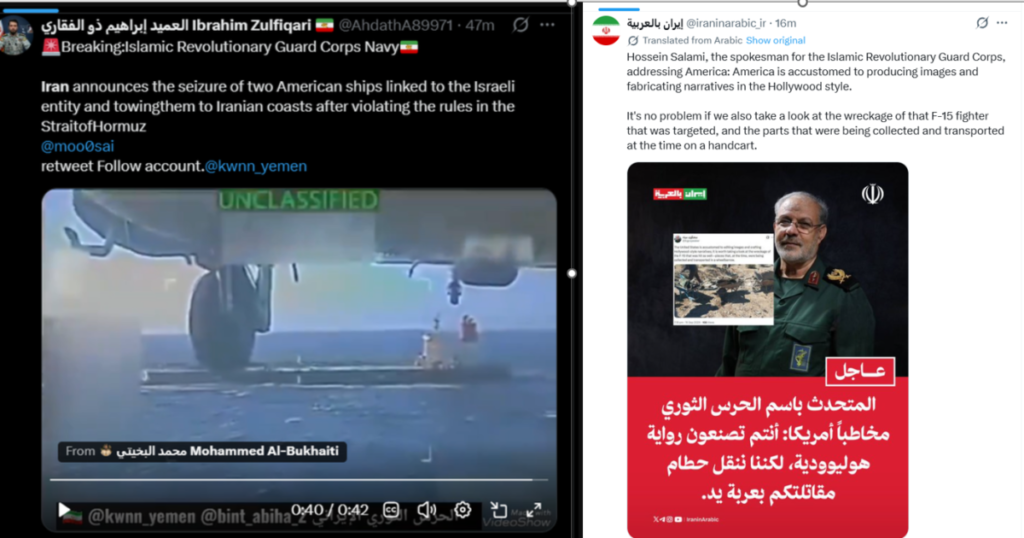
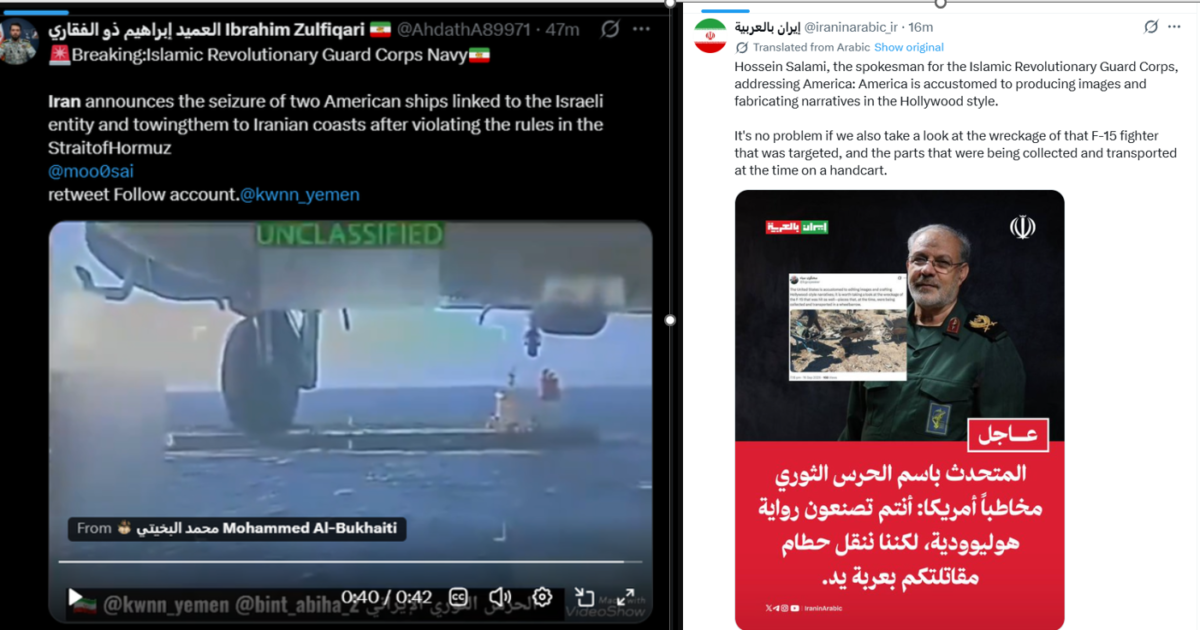
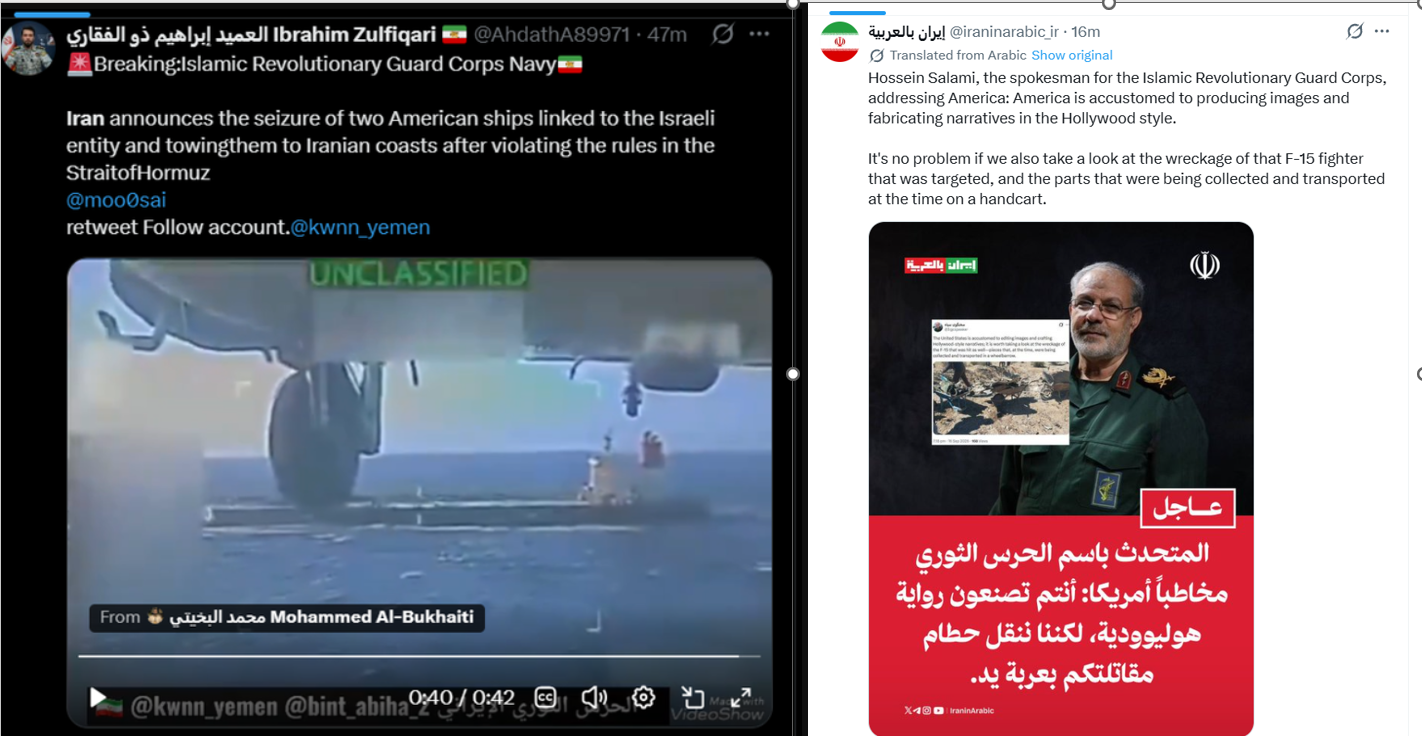
On September 16, Iranian state-linked media reportedly posted a video on X purporting to show Iranian drones hitting a U.S. aircraft carrier, with fires on the flight deck and crew members running. The caption claimed nearly 200 people were killed, including “soldiers and special forces personnel.” The source says the video was fake and the incident did not happen.
Another post claimed Iran captured several “CIA boys from Delta,” conflating the CIA with Delta Force. A separate ship-fire video was captioned as if Iran had blown up “another” U.S. ship. The source states that Iran has destroyed zero U.S. ships, and that the same footage later appeared with a Portuguese-language caption claiming a U.S. ship had been attacked for crossing the Strait of Hormuz without Iranian authorization.
A broader ecosystem, not just state media
The source cautions that only a handful of the 151 false claims tracked by NewsGuard were traced directly to Iranian state media. It says much of the content came from anonymous accounts, engagement-farming networks and proxy influencers.
That distinction matters. The source describes a broader pro-Iran information ecosystem rather than a campaign fully controlled by Tehran.
A Carnegie Endowment analysis cited in the source found that Iran is directing content toward diaspora communities, Global South solidarity networks and the U.S. anti-war left. PBS News, also cited in the source, reported that pro-Iran AI meme campaigns are designed to troll Trump and shape domestic narratives.
The result is a messaging loop in which false or recycled content can be translated, reposted and adopted by audiences already inclined to believe that the United States is losing or that the war is a manufactured disaster.
The most important distinction is also the simplest: petitions, evacuations and base realignments are not the same as governments expelling U.S. troops. And viral videos are not proof of destroyed ships unless the evidence survives verification.