
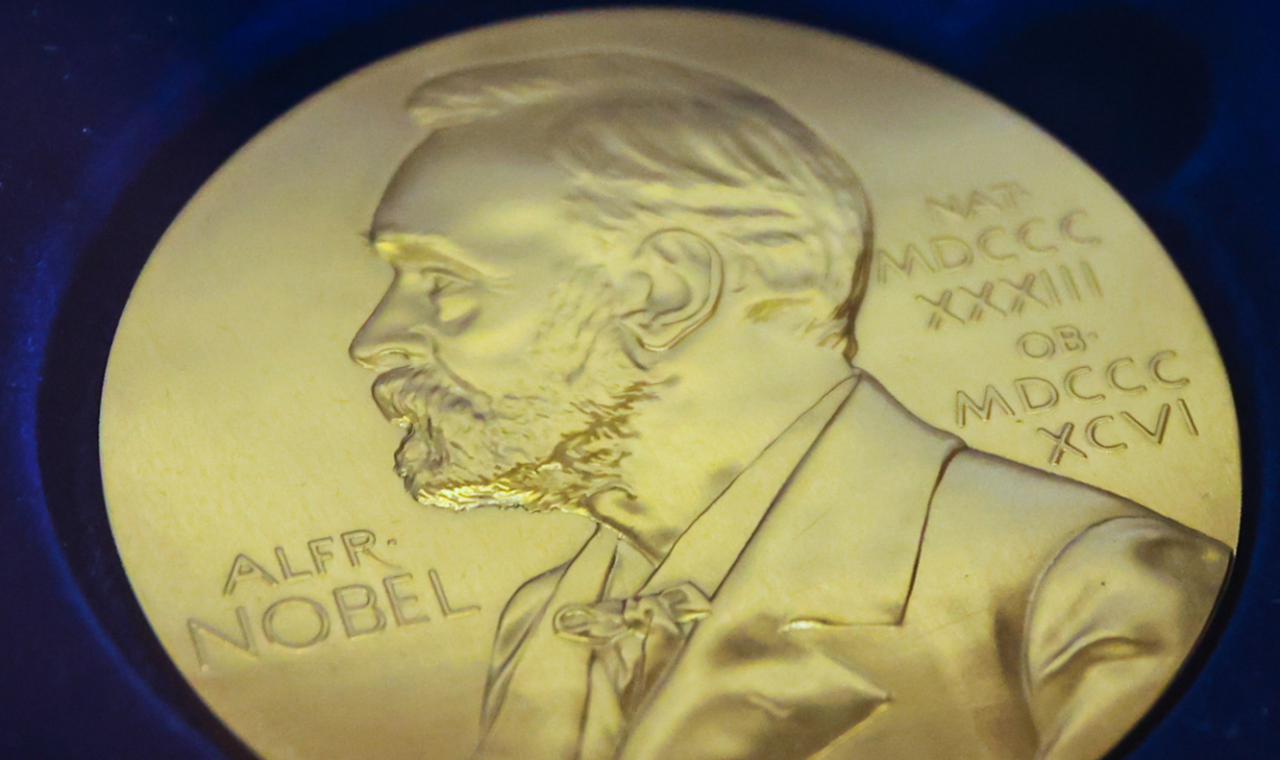
Henri B. Kagan (Université Paris‑Sud) and Kenso Soai (Tokyo University of Science) were awarded the 2026 Nobel Prize in Chemistry for work that, according to the Nobel Committee, provides a solution to the “over a century old” mystery of life’s asymmetry. Chair Heiner Linke said, “Henri Kagan and Kenso Soai have provided a solution to a chemical mystery that is over a century old: how homochirality – the selective production of the correct version of a molecule – can emerge spontaneously. The chemical reactions they have developed are spectacular.”
Speaking by phone to the Nobel press conference, Soai said: “This is one of the most exciting days of my life.”

Why ‘one‑handed’ molecules matter
BBC News explains that many molecules come in two mirror‑image forms, a property called chirality. While nature almost exclusively produces the form it needs, standard lab reactions usually yield a 50‑50 mix. That difference can be critical in medicine: the report cites thalidomide, a chiral drug prescribed in the 1950s, where the right‑handed version was effective against morning sickness but the left‑handed version was toxic. The original drug was a mixture, and the body can interconvert the forms; thousands of children born to women who took the drug developed severe disabilities.
What Kagan and Soai achieved
According to BBC News, Kagan in 1986 discovered a new way to manipulate reactions to produce a much larger excess of one mirror image than previously thought possible. Soai took the next step: in 1995 he reported in Nature the first reaction with the potential to be homochiral, and in 2003 he controlled a reaction in which only one of the two possible mirror images formed. “Other than life itself,” the Nobel Committee said in a statement, “no one had previously achieved this feat”.
What experts said
Linke summarized the advance as showing how homochirality can emerge spontaneously. Professor Robert Mokaya, president of the UK’s Royal Society of Chemistry, called it a “powerful example of how fundamental chemistry can underpin solutions to some of the biggest challenges facing society,” adding that different isomers “can have completely different biological and physical effects,” which is crucial for finding effective medicines.

Prof Angus Davison of the University of Nottingham told BBC News the Nobel‑winning chemistry could help reveal why life favors “one‑handedness.” “In ways that we don’t yet quite understand, the chirality of the basic building blocks of life ends up making bodies that are themselves also chiral,” he said, linking it to our hearts being on the left and many snail shells coiling to the right.
Peter Somfai of the Nobel Committee said the research has become part of “our basic understanding of how chemistry functions.” Showing how a mirror image is created is “probably the most fundamental question in life – because somehow that happened four billion years ago when life was created. And now we have, for the first time, mimicked that in the lab”.


The prize
BBC News reports the laureates receive a Nobel medal and a share of 12.0 million Swedish Kroner ($1.25m; £900,000).