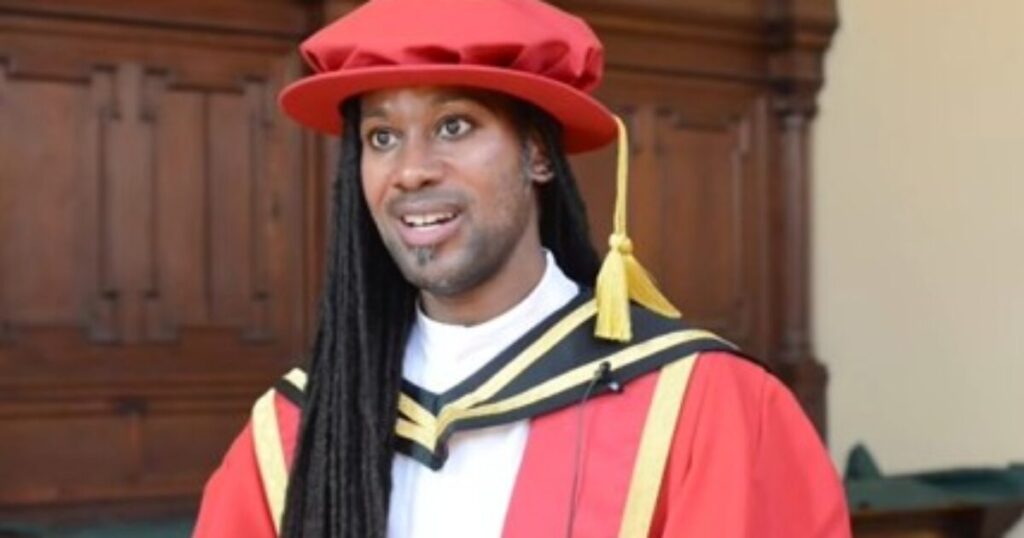
Jason Arday’s death has turned a controversy over his academic record and personal story into a broader fight over blame, race, media scrutiny and the responsibilities of elite universities.
Arday, a former University of Cambridge scholar, died Friday, according to the source article. Police reportedly described the death as “unexpected” and “not believed to be suspicious.” No official cause of death was provided in the supplied material.

In a Saturday essay for The Emancipator, which he co-founded, antiracist scholar Ibram X. Kendi accused the media of helping destroy Arday. The essay’s title, as quoted in the source, was blunt: “The Media Lynched Jason Arday.”
“His death left me so devastated I had no words when the news broke,” Kendi wrote, according to the source. “But I woke up this morning with words.”
Kendi’s charge
Kendi framed the scrutiny of Arday as part of a pattern faced by prominent Black antiracist scholars. In quoted passages from his essay, Kendi argued that such scholars become targets of “racist propagandists” and also of “centrist and progressive White scholars and writers” who resent their positions, honors and pay.
According to the source article, Kendi contrasted the scale of coverage of Arday with coverage of William O’Reilly, described as a white Cambridge professor accused of plagiarism in 2023. Kendi reportedly argued that Arday faced “249 times more media coverage” over what he characterized as an “accusation of plagiarism.”
Kendi also connected Arday’s experience to scrutiny he has faced over Boston University’s Center for Antiracist Research. The source quotes him as writing, “I’ve seen other prominent Black scholars face these attacks time and again.”
The allegations around Arday
The controversy surrounding Arday centered on claims about his biography and scholarship. The source says Arday had been publicly presented as Cambridge’s youngest Black professor and as someone who was nonverbal until age 11, could not read until age 18, earned a Ph.D. and raised millions for charity.
The source article says those biographical claims were challenged before the planned release of Arday’s memoir. It also alleges that parts of his academic work were “thin, sloppy, and plagiarized.” Those claims should be treated as allegations unless independently verified by editors through primary documents or reliable reporting.
The article cites a New York Times report that reviewed Cambridge documents and interviewed former colleagues and associates. According to the cited report, Cambridge hired Arday in 2023 despite requirements calling for “an outstanding research record of international stature” and a “proven successful track record” supervising Ph.D. students.
The same cited reporting said Arday had a “modest publication record” and had not remained long enough at prior institutions to oversee a full doctorate, but Cambridge hired him anyway for a prestigious sociology post.
Cambridge’s role under scrutiny
The cited New York Times reporting also alleged that Cambridge ignored warning signs, publicly praised Arday’s scholarship and privately disregarded complaints about his work. According to the quoted account, administrators declined to investigate plagiarism concerns and accused critics of a “vile campaign” to discredit him.
The source further says the Times reported that Arday’s claims about not speaking were disputed by a former classmate and a speech professional who had worked with him. Experts in developmental and speech delays reportedly told the paper that the claimed trajectory from nonverbal preteen to Ph.D. had no precedent in medical literature.
The source article argues that Cambridge, not the media, bears responsibility for elevating Arday and allegedly failing to verify parts of his story. That is the author’s interpretation, not an established finding.
A blame fight with unresolved facts
Kendi’s position, as quoted, is that media attention intensified attacks on a Black scholar and helped create the conditions for his destruction. The opposing view in the source is that the press exposed problems Cambridge should have identified much earlier.
What remains clear from the supplied material is that Arday’s death occurred amid intense scrutiny of his biography, his scholarship and Cambridge’s vetting. What is not established in the supplied material is the cause of death, the full extent of any plagiarism, or whether Cambridge’s actions were driven by diversity goals, institutional defensiveness or other factors.